
If you’ve hit your late 30s or 40s and noticed that your afternoon coffee doesn’t hit quite the same – or that bouncing back from a busy week takes twice as long – you aren’t imagining things.
For years, “anti-aging” meant expensive face creams and quick-fix energy drinks. Today, modern longevity science has shifted the focus inward: true healthy aging starts inside your cells.
When your cells produce energy efficiently and repair daily wear-and-tear, you feel sharp, resilient, and vibrant. When that cellular machinery slows down, you experience fatigue, brain fog, and slower recovery. Here is what actually happens inside your body after 35 – and how two compounds, CoQ10 (Coenzyme Q10) and TMG (Trimethylglycine), work together to keep your cellular engine running strong.
Quick Comparison: CoQ10 vs. TMG for Healthy Aging
| Feature | CoQ10 (Coenzyme Q10) | TMG (Trimethylglycine) |
|---|---|---|
| Primary Role | Powers mitochondria (cellular energy production) | Supports methylation, DNA repair & liver health |
| Key Benefits | Heart health, stamina, antioxidant defense | Homocysteine balance, brain clarity, physical endurance |
| Why It Drops | Natural production declines steadily after age 20–30 | Demand increases with stress, aging & poor diet |
| Best For | Daily energy, cardiovascular support, statin users | Longevity protocols, metabolic & liver support |
What Is “Cellular Aging” (And Why Does It Speed Up After 35)?
Every day, trillions of cells in your body perform two critical jobs: generating energy and repairing cellular damage.
Around your mid-30s, two major biological shifts begin to occur:
- Mitochondrial Slowdown: Your mitochondria – the tiny “power plants” inside your cells – become less efficient at turning food into usable energy (ATP). Because your heart and brain require the most energy, they are often the first places you feel the dip.
2. Declining Methylation Efficiency: Methylation is a vital biochemical process that happens billions of times every second. It controls how your body repairs DNA, detoxifies hormones, and regulates homocysteine (an amino acid linked to cardiovascular health when elevated).
Supporting just one of these pathways helps – but supporting both creates a powerful foundation for long-term vitality.

CoQ10: The Spark Plug for Your Heart and Mitochondria
Coenzyme Q10 (CoQ10) is a natural compound found in almost every cell of your body. You can think of it as a spark plug – without enough of it, your cells simply cannot generate clean, steady energy.
Why CoQ10 Matters More as You Age:
- NATURAL LEVELS DROP: By age 40, your body’s natural CoQ10 levels can be significantly lower than they were in your 20s – especially in heart muscle tissue.
- CARDIOVASCULAR PROTECTION: Your heart beats roughly 100,000 times a day and needs massive amounts of energy. CoQ10 fuels your heart muscle and protects your blood vessels from everyday stress.
- GREAT FOR STATIN USERS: If you take cholesterol-lowering statin medications, they are known to deplete your body’s natural CoQ10 levels, often causing muscle tiredness and sluggishness.
Pro Tip: Because CoQ10 is fat-soluble, always take your capsule with a meal containing healthy fats (like avocado, eggs, olive oil, or nuts) for maximum absorption.
TMG: The Everyday Reset Button
While CoQ10 fuels your cellular engines, TMG (Trimethylglycine) – also known as betaine – acts as your body’s master maintenance crew. Originally found in beets and spinach, TMG is a methyl donor – it hands out tiny chemical “tags” (called methyl groups) your cells need to keep daily operations running smoothly.
Think of those tags like little switches or helper tokens that help your body repair DNA, keep homocysteine levels in check, and support liver health. As we get older and deal with everyday stress, our demand for this behind-the-scenes maintenance goes up.
How TMG Supports Healthy Aging:
- PROTECTS HEART AND CIRCULATION: TMG helps keep normal, healthy levels of homocysteine (an amino acid that can strain your cardiovascular system when it gets too high).
- BOOSTS LIVER AND DETOX PATHWAYS: Your liver works around the clock to process daily toxins. TMG gives your liver the nutritional building blocks it needs to do its job efficiently.
- FIGHTS BRAIN FOG: Many people notice better mental clarity and stamina when adding TMG to their daily wellness routine.
Why They Work Best Together
Most people take either an energy supplement or a heart supplement – rarely realizing how closely connected they are. Energy production and cellular repair are two sides of the same coin. If your cells are working hard to produce energy, they also need steady maintenance to stay clean and efficient.
- CoQ10 drives ATP energy production in your heart, brain, and muscles while defending cell membranes against free radicals.
- TMG supports daily methylation, helps your liver process everyday toxins, and maintains healthy homocysteine levels for long-term heart health.
Together, they address the root causes of feeling “worn down” after 35 – without relying on stimulants, sugar, or extra cups of afternoon coffee.
Frequently Asked Questions (FAQ)
- Can I take CoQ10 and TMG at the same time?
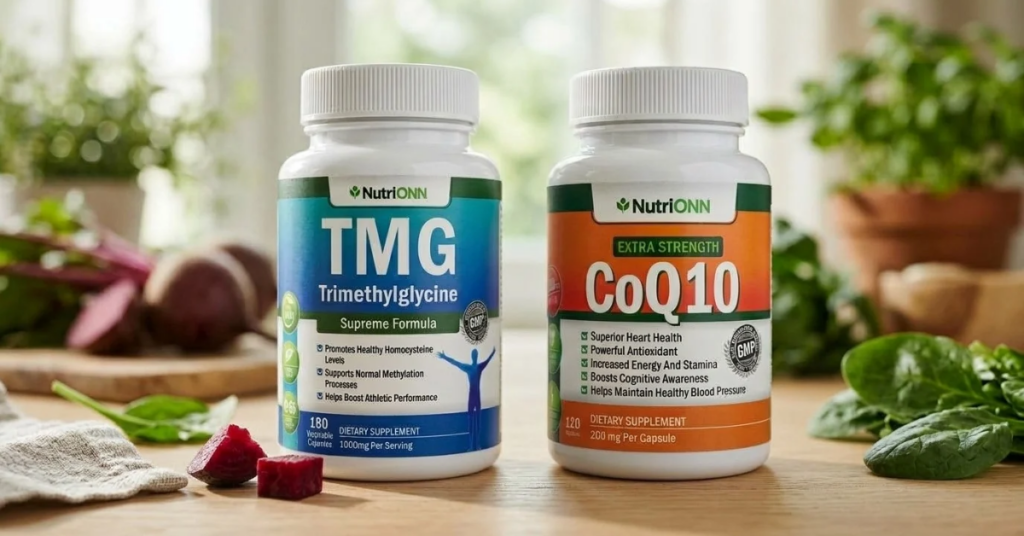
Yes! CoQ10 and TMG work through different biological pathways and complement each other well. Taking them together in the morning or at lunch with a meal is an easy way to build a daily longevity routine.
2. How long does it take to feel a difference?
Unlike caffeine, cellular supplements build up gradually. Most people notice steadier daytime energy, less afternoon fatigue, and better workout recovery within 2 to 4 weeks of consistent daily use.
3. Do I still need CoQ10 and TMG if I eat a healthy diet?
While foods like spinach, beets, fatty fish, and organ meats contain small amounts of TMG and CoQ10, you would have to eat massive quantities daily to match clinical study doses – especially as natural synthesis declines with age.



0 Comments